
Brisbane 2032 Countdown Clock: Six Years to Go, Venues Still to Build
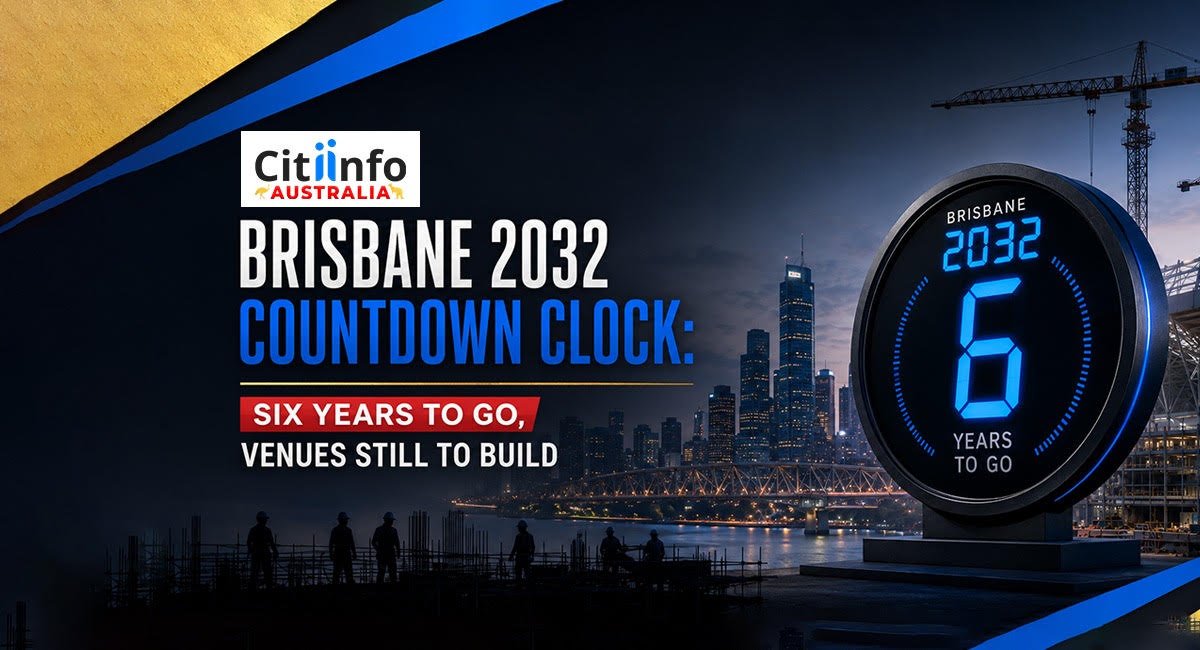
Brisbane has officially reached the six-year countdown to the 2032 Olympic and Paralympic Games, but the milestone is also highlighting how much work remains before the world's biggest sporting event arrives in Queensland.
On 23 July 2026, Brisbane City Council unveiled an official OMEGA Countdown Clock in Queen Street Mall, marking six years until the opening of the Brisbane 2032 Olympic Games. The event brought together Brisbane Lord Mayor Adrian Schrinner, Games President Andrew Liveris, Queensland Deputy Premier Jarrod Bleijie and Australian swimming champion Emma McKeon.
While the countdown clock provides a highly visible symbol of Brisbane's preparations, the milestone also raises an important question: how much of the required Olympic infrastructure is actually ready?
Six Years Until Brisbane Welcomes the World
The countdown clock in Queen Street Mall is designed to build excitement as Brisbane moves closer to hosting the Olympic and Paralympic Games.
For residents and visitors, the clock offers a daily reminder that the Games are no longer a distant event. Brisbane has entered the period when major construction, transport planning and venue upgrades need to accelerate.
The Games are expected to bring thousands of athletes, officials and visitors to Queensland, creating significant demands on sporting facilities, public transport, accommodation and surrounding infrastructure.
However, the six-year milestone also provides an opportunity to examine whether preparations are progressing quickly enough.
Major Venue Construction Still Ahead
One of the biggest challenges facing Brisbane 2032 is the amount of venue construction still to be completed.
At the six-year mark, only one major new venue contract has been awarded: the contract associated with the proposed Victoria Park main stadium.
Seven new venues are still expected to be built, while another ten existing venues are planned for upgrades. This means a substantial construction program remains ahead of Brisbane as the Games approach.
Large sporting infrastructure projects can take years to design, approve, construct and test. They also require coordination between governments, construction companies, sporting organisations and local communities.
With 2032 approaching, maintaining the construction schedule will therefore be critical.
Read this blog - Brisbane 2032 Olympics Countdown Clock Unveiled: Six Years to Go for the Games
Victoria Park Stadium at the Centre of Attention
The proposed Victoria Park stadium has become one of the most closely watched parts of Brisbane's Olympic preparations.
The stadium is planned to serve as the main venue for the Games and represents one of the largest infrastructure projects connected with Brisbane 2032.
Its development has also generated debate. Questions surrounding construction costs, the stadium site and the broader financial impact of hosting the Games have attracted public attention and protests.
For Brisbane, the challenge is to deliver a stadium that meets Olympic requirements while managing costs and addressing concerns from residents and other stakeholders.
Costs Remain a Major Public Concern
The Brisbane 2032 project is taking place against a backdrop of increasing scrutiny over the cost of Olympic infrastructure.
Major sporting events often require governments to invest heavily in venues, transport and supporting infrastructure. While these projects can create long-term benefits for a city, they can also generate concerns about whether the public investment represents good value.
For Brisbane residents, the question is not simply whether the Games will be successful. It is also whether the infrastructure built for 2032 will provide lasting benefits after the Olympic and Paralympic events have finished.
This makes decisions about venue locations, construction standards and long-term use particularly important.
More Than Just Sporting Venues
Preparing Brisbane for 2032 involves much more than building stadiums and aquatic centres.
Transport will be an important part of the city's Olympic preparations. Large numbers of spectators are expected to travel between venues, accommodation areas and the Brisbane CBD.
Public spaces, roads, pedestrian infrastructure and surrounding facilities may also need improvements to handle increased activity during the Games.
The Olympic infrastructure program could therefore have an impact on Brisbane's development well beyond the sporting venues themselves.
The National Aquatic Centre and Other Venues
Aquatic sports will form an important part of the Brisbane 2032 program, making the development and upgrade of facilities such as the planned National Aquatic Centre another key element of preparations.
Alongside new venues, existing sporting facilities are expected to receive upgrades so they can meet the requirements of the Games.
Upgrading existing infrastructure can offer an advantage because it may reduce the need for completely new facilities. However, those upgrades still need to be completed on schedule and provide the required capacity and technology for an international sporting event.
What the Six-Year Countdown Means
The six-year countdown is more than a promotional milestone. It represents a critical stage in Brisbane's preparation timeline.
The city now has six years to complete new venues, upgrade existing facilities, improve supporting infrastructure and prepare for the operational demands of hosting athletes and spectators from around the world.
For the latest Brisbane news, local developments and Australian city updates, Citiinfo provides useful information to help readers stay informed about what's happening across Australia.
The pressure will increase as major projects move from planning into construction.
For Brisbane residents, the coming years are likely to bring more construction activity, changes around major venues and continued discussion about the cost and benefits of hosting the Games.
A Defining Moment for Brisbane
The 2032 Olympics and Paralympics represent one of the largest international events ever to be hosted in Queensland.
The Queen Street Mall countdown clock captures the excitement surrounding the Games, but it also serves as a reminder of the work still required.
With seven new venues still to build and ten existing venues scheduled for upgrades, Brisbane's Olympic journey has entered a decisive phase.
The success of Brisbane 2032 will ultimately depend on more than what happens during the Games themselves. The quality, affordability and long-term usefulness of the infrastructure built in the lead-up to 2032 could shape the city's future for decades.
As the countdown moves from six years to five, four and eventually one, Brisbane will face increasing pressure to turn Olympic plans into completed projects.
For now, the clock in Queen Street Mall is ticking — and the race to prepare Brisbane for 2032 is well underway.